

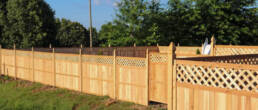
Choosing a fence material is one of those decisions homeowners in Rolla, Salem, and the surrounding I-44 corridor tend to put off until the old fence is falling over. But the material you choose affects everything from your upfront cost to how much time you’ll spend maintaining it ten years from now, and the wrong choice for your property can mean redoing the job sooner than you’d like. As a family-owned fencing company built on a background in welding and farming, we’ve installed just about every type of residential fence Central Missouri weather can test, and we’ve learned that the “best” fence really depends on what you need it to do. What works well for a young family with a dog and a play set in the yard often looks nothing like what makes sense for a homeowner mainly focused on curb appeal and low upkeep, and both are perfectly valid starting points.
This guide walks through the most common residential fencing materials we install, what each one is actually good at, where it tends to fall short, and how to think through the decision for your own property before you request an estimate. We’ll also cover roughly where each material lands on cost and maintenance, so you can go into that estimate with realistic expectations instead of sticker shock.
What to Think About Before You Choose a Fence Material
Before comparing materials side by side, it helps to get clear on what you actually want the fence to accomplish. A few questions we walk through with nearly every homeowner during a residential fencing consultation:
- What’s the primary purpose? Privacy, containing pets or kids, marking a property line, or boosting curb appeal all point toward different materials.
- How much maintenance are you willing to do? Some materials need periodic staining or sealing to hold up; others are close to maintenance-free once installed.
- What’s your budget range? Material cost varies significantly, and so does installation labor depending on terrain, fence height, and total footage.
- Does your neighborhood have HOA restrictions? Some communities limit fence height, material, or color, so it’s worth checking covenants before you fall in love with a style.
- How long do you plan to stay in the home? A longer timeline can justify a higher upfront investment in a lower-maintenance material, while a shorter one might make a budget-friendly option more sensible.
- What does your yard’s terrain look like? Slopes, tree roots, and rocky soil can all affect which materials install cleanly and which need extra site prep.
- Are you fencing the whole yard or just a section? A front-yard accent fence and a full perimeter fence often call for different materials, even on the same property.
Once you have a sense of your priorities, the material choice usually narrows down fast, and a lot of the remaining decision comes down to trade-offs between look, cost, and upkeep. As a general pattern, chain link tends to sit at the lower end of the cost range, wood and aluminum land in a similar middle range depending on style and height, and ornamental steel runs higher due to the fabrication involved. None of that is a strict rule, since total footage, terrain, and gate count move the number more than material alone, but it’s a useful starting point when you’re comparing options before an on-site estimate.
Chain Link Fencing: Budget-Friendly and Practical
Chain link remains one of the most requested residential materials we install, and for good reason. It’s affordable relative to other materials, durable, and low-maintenance, which makes it a practical choice for containing pets or kids, marking a boundary line, or fencing off a large area without a large price tag. We install both galvanized and black chain link, with black often preferred in neighborhoods where homeowners want something a little less industrial-looking blending into landscaping.
Chain link isn’t going to win any curb-appeal awards on its own, but it holds up well to Missouri’s swing between humid summers and icy winters, and it requires essentially no upkeep beyond an occasional check of the tension and posts after a hard freeze-thaw cycle. It’s also fast to install compared to wood or steel, which keeps labor costs down. For homeowners who also want an added layer of protection around a shed, pool equipment, or side yard, we often apply the same perimeter security principles we use on commercial properties, just scaled down to a residential footprint and budget. We can also add a walk gate or drive gate to a chain link layout, including options for basic gate automation if you’d rather not get out of the car to open and close it every time.
Wood Fencing: Classic Curb Appeal and Privacy
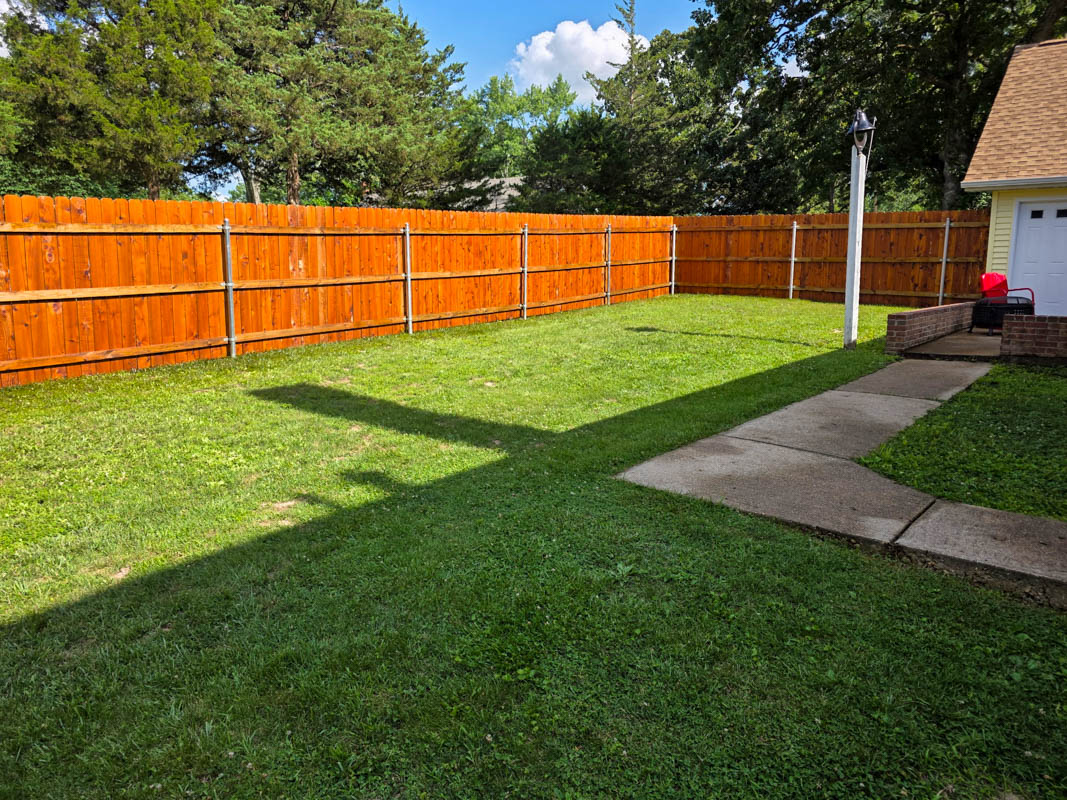 Wood is still the go-to material for homeowners who want real privacy and a warm, traditional look. A tall wood privacy fence blocks sightlines from neighbors and the street far more effectively than chain link or aluminum, and it gives you flexibility in style, from horizontal board designs to classic vertical privacy panels to shorter picket styles for a more decorative front-yard look.
The tradeoff is maintenance. Wood needs periodic staining or sealing to resist rot, warping, and sun damage, especially with Central Missouri’s humidity swings and freeze-thaw winters. We typically recommend a fresh coat within the first year of installation, once the wood has had time to cure, and then again every few years after that depending on sun exposure. We offer professional fence staining using a premium, long-cure product for homeowners who want the wood protected without doing the sanding and sealing themselves. With that upkeep on a regular schedule, a well-built wood privacy fence can look good and function well for decades, and it remains one of the better options if resale curb appeal is part of your decision. Panel height and board spacing also make a difference in how much privacy you actually get, so it’s worth discussing your specific sightline concerns during the estimate rather than defaulting to a standard height.
Aluminum Fencing: Low-Maintenance and Decorative
Aluminum fencing gives homeowners a decorative, semi-open look, similar in appearance to wrought iron, without the rust concerns or the weight. It’s a strong fit for front-yard fencing, pool enclosures, or anywhere you want a defined boundary that doesn’t block the view of landscaping, a garden, or the house itself. Aluminum also comes in a range of finishes and picket styles, so it can be dressed up for a more formal entrance or kept simple for a straightforward yard boundary.
Because aluminum doesn’t rust and doesn’t need staining or sealing, it’s about as close to a “set it and forget it” material as residential fencing gets, which matters a lot to homeowners who don’t want a recurring maintenance chore added to their year. It costs more upfront than chain link, but many homeowners find the combination of appearance and low maintenance worth the difference, particularly for properties where the fence is a visible part of the home’s overall curb appeal rather than something tucked away in the back yard. Aluminum also tends to be a good fit around pools, since the open picket design doesn’t create a climbable surface the way horizontal rails can, though local code requirements around pool barriers vary and are worth checking before you finalize a layout.
Ornamental Steel Fencing: Built to Last
For homeowners who want the strength of steel with a more refined look than chain link, ornamental steel fencing is worth considering. We build our steel fencing and gates with all-steel bracing rather than wood supports, which is the same construction standard we use on our agricultural and commercial projects, and it’s backed by our lifetime craftsmanship warranty against issues like broken or cracked welds. That construction quality matters most at gate posts and corners, where a fence takes the most stress over time from wind, ground movement, and daily use.
Steel fencing works particularly well for entryways, decorative arches, and gated driveway approaches, and it holds up to Missouri weather better than most alternatives without sacrificing appearance. If you’re considering adding a statement entrance to your property, our custom gates and entryways page covers what’s possible, from simple gated approaches to fully automated entrances that open with a keypad or remote. It’s the same all-steel bracing approach we use on larger commercial and agricultural gates, just sized and styled for a residential driveway or side yard.
Quick Checklist: Choosing the Right Fence for Your Property
If you’re still weighing your options after reading through the materials above, here’s a fast way to narrow things down:
- Want the lowest upfront cost and don’t mind a simpler look? Chain link is usually the right starting point.
- Want maximum privacy and don’t mind occasional maintenance? Wood is hard to beat.
- Want a decorative look with almost no upkeep? Aluminum fits that need well.
- Want strength, longevity, and a refined appearance, especially at gates and entryways? Ornamental steel is worth the investment.
- Still not sure which fits your property, budget, and terrain? A free on-site estimate is the fastest way to get a straight answer instead of guessing from photos online.
We work with homeowners throughout the region, including Sullivan, Union, and Cuba and St. James, and every property brings its own mix of terrain, budget, and style preferences. There’s rarely a single “right” answer here, just the right answer for your yard, your budget, and how much maintenance you’re realistically willing to take on year after year. And if none of the four materials above feels like a perfect fit on its own, it’s worth knowing that combining materials, such as steel posts with wood infill, or aluminum along the front and chain link along the back, is often possible and can be a good way to balance cost against appearance.
Ready to Get Started?
Whether you already know which material you want or you’re still deciding between a few options, we’re happy to walk through it with you in person. As a family-owned company based near fencing company in Salem, MO, we’ve built residential fences across Central Missouri, and we back our work with a craftsmanship warranty on every project, regardless of which material you choose. Request an Appointment today and we’ll come take a look at your property, talk through what makes sense for your goals and budget, and provide a free estimate with no pressure attached. There’s no obligation to move forward, and we’d rather you choose the right fence the first time than end up redoing the job in a few years.
Ready to Start Your Fencing Project?
At Holliday Fencing Services, we provide honest advice, quality craftsmanship, and reliable service — whether you need residential privacy fencing, commercial agricultural solutions, security perimeter fencing, or anything in between.
Contact us today for a free, no-obligation estimate.
Like this article? Spread the word!
Related Posts
How To Secure a Commercial Property on I-44
Securing a business along the I-44 corridor? Learn how to choose fence height, materials…

How to Choose the Right Fence for Cattle, Horses, or Mixed Livestock
Choosing a fence for cattle, horses, or mixed livestock? See what to consider, then…

Holliday Welding & Fence’s Guide to Fencing for Cattle and Horse Properties in Central Missouri
Planning fencing for a cattle and horse property in Central Missouri? Request an…